April 25th, 2012 |
Published in
Spirit
A friend of mine asked on Facebook, “What are the characteristics of a disciple? How would you know if a person is one?” which led me to search for the term μαθητης (Greek word for disciple) in the New Testament. The word μαθητης occurs 261 times between the books of Matthew, Mark, Luke, John and Acts. Here is what I found:
- Disciples eat with IRS employees and other sinners – Matthew 9:10, Mark 2:16, Luke 5:30
- Disciples do not like to skip meals – Matthew 9:14, Mark 2:18
- Disciples have authority over unclean spirits and can heal every kind of disease and sickness – Matthew 10:1; Just kidding – Mark 9:18, Luke 9:40
- Disciples do not observe the Sabbath – Matthew 12:2-3
- Disciples do not understand parables – Matthew 13:36, Mark 7:17, Luke 8:9
- Disciples do not wash their hands before they eat – Matthew 15:2, Mark 7:5
- Disciples do not like to waste expensive perfume – Mathew 26:7-8
- Disciples like to sleep – Matthew 26:40-45, Luke 22:45-46
- Disciples betray Jesus – Matthew 26:8, Luke 22:47-48, John 12:4
- Disciples will be like Jesus – Luke 6:40
- Disciples sometimes can get a little postal – Luke 9:54
- Disciples don’t know how to pray – Luke 11:1
- Disciples hate their father, mother, wife, children, brothers, sisters, and themselves – Luke 14:26
- Disciples carry their own cross – Luke 14:27
- Disciples give up all their own possessions – Luke 14:33
- Disciples don’t like kids, but should – Luke 18:15
- Disciples abide in Jesus’ words – John 8:31
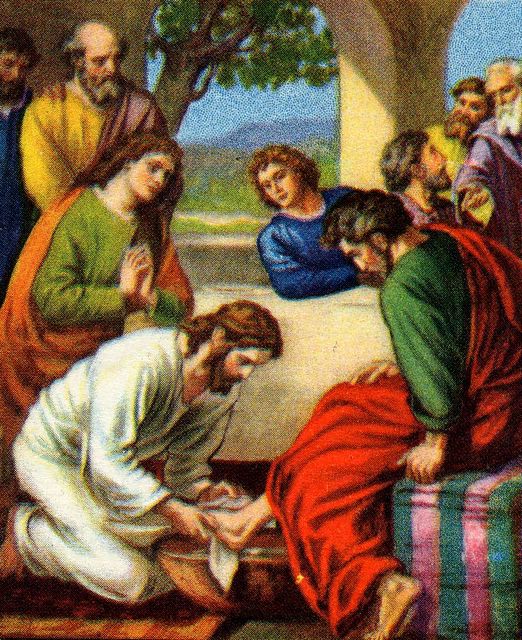
- Disciples like pedicures – John 13:5
- Disciples love one another – John 13:35
- Disciples lie about knowing Jesus – John 18:17-27
- Disciples comfort their mothers, sometimes – John 19:27
- Some disciples take a lot of convincing – John 20:25
- Some disciples do not like to serve tables – Acts 6:2
- Disciples are continually filled with joy and the Holy Spirit – Acts 13:52
- Um… and one to grow on…
Obviously this isn’t a complete list of what a disciple of Jesus looks like, but it should get you started on your journey.
Tags: discipleship, greek, μαθητης
November 24th, 2009 |
Published in
Spirit
I’ve decided to start a series of some of the theological words and terms that we use in our everyday Christian lives that are not found in Scripture. The first word I want to talk about is “church”. Right now you’re probably screaming that the word “church” (and it’s derivatives) appear 112 times in the New Testament (NASB). Well, many of the words that I am going to talk about are actually all over our English translations. This may sound contradictory, but I assure you it isn’t. Just follow along and you will see what I am talking about.
Because there are words in our Bibles that are not valid translations, it causes confusion and goes against the very nature of scripture. Our Old Testament scriptures were written in Hebrew (and some Aramaic), the language of the Israelites. Our New Testament scriptures were written in what is called “Common Greek”. In other words, our scriptures were written in the languages of the people. Remove ourselves from those languages, put in 2000 years of mixed up Christian history and you get translations and other doctrine that is full of words and terms written for professionally trained or educated individuals.
So, back to the word “church”. What does it mean? Where does it come from? Well, the English word for ‘church’ actually comes from the German word “Kirche” which is a translation of the Greek word “kuriakon”. Kuriakon means “belonging to the Lord” but was eventually used to designate buildings.
So, what’s the problem? Well, I’m not finished yet. You see, the word “church” in the Bible is never being used to translate the word “Kuriakon”. Instead, it’s being used to translate the Greek word “ekklesia”. The word “ekklesia” does not mean “belonging to the Lord” it means “assembly” or “congregation” — that’s it. You see, King James told the translators to use “church” to translate “ekklesia” instead of using “congregation” or “assembly” which was used by some of the earlier translation. Oh, if anyone tells you “ekklesia” means “called out ones” punch them square in the mouth.
The Facts
- The word “kuriakon” which again means “belonging to the Lord” occurs twice in the New Testament. It is not translated “church” in either case (1 Corinthians 11:20 & Revelation 1:10).
- The word “church” occurs 112 times in the NASB. It is never a translation of the word “kuriakon” (from which is it derived).
- The word “ekklesia” occurs 115 times in the New Testament. It is translated “church” 112 times, “congregation” 2 times, and 1 time it is translated “assembly”.
Conclusion
I hope you see where I am going with this. The word “church” does not actually exist, it is meaningless. In fact, it was originally used as a form of deception! We held onto the word because of tradition (and maybe because of more deception). We have used the word “church” to mean the building, the time, pretty much everything except what the Scriptures actually intended. The rest of this series will be about these nonsensical words. Hopefully we will all to stop using them and replace them with words that actually mean what God intended when he inspired these writings.
Tags: bible, church, ekklesia, greek, kuriakon, new testament, old testament, scripture, tradition, words not found in scripture